
Part of our Pet Sitter Instructions guide
Cat Sitter Instructions: What Your Cat Would Want the Sitter to Know

If your cat could write the sitter a note, it would start with the bouquet on the table: the FDA says true lilies and daylilies can cause fatal kidney failure in cats, even from pollen or vase water. After that, the note covers exact meals, water, litter scooping, hiding spots, the vet and poison numbers, and when to call you.
This guide is for anyone leaving a cat with a sitter, a neighbor, or a relative, especially over the holidays. You'll find a made-up "note from the cat," a free mini page you can tick on your phone or print, the lily warning in plain English, and a short quiz on what's an emergency.
Did you know? The same lily that gives a dog a mild upset stomach can be deadly for a cat. The FDA says licking a few grains of lily pollen off its fur, or drinking the water from the vase, can cause fatal kidney failure in less than 3 days, and the toxin only affects cats. FDA: Lovely Lilies and Curious Cats
What should cat sitter instructions include?
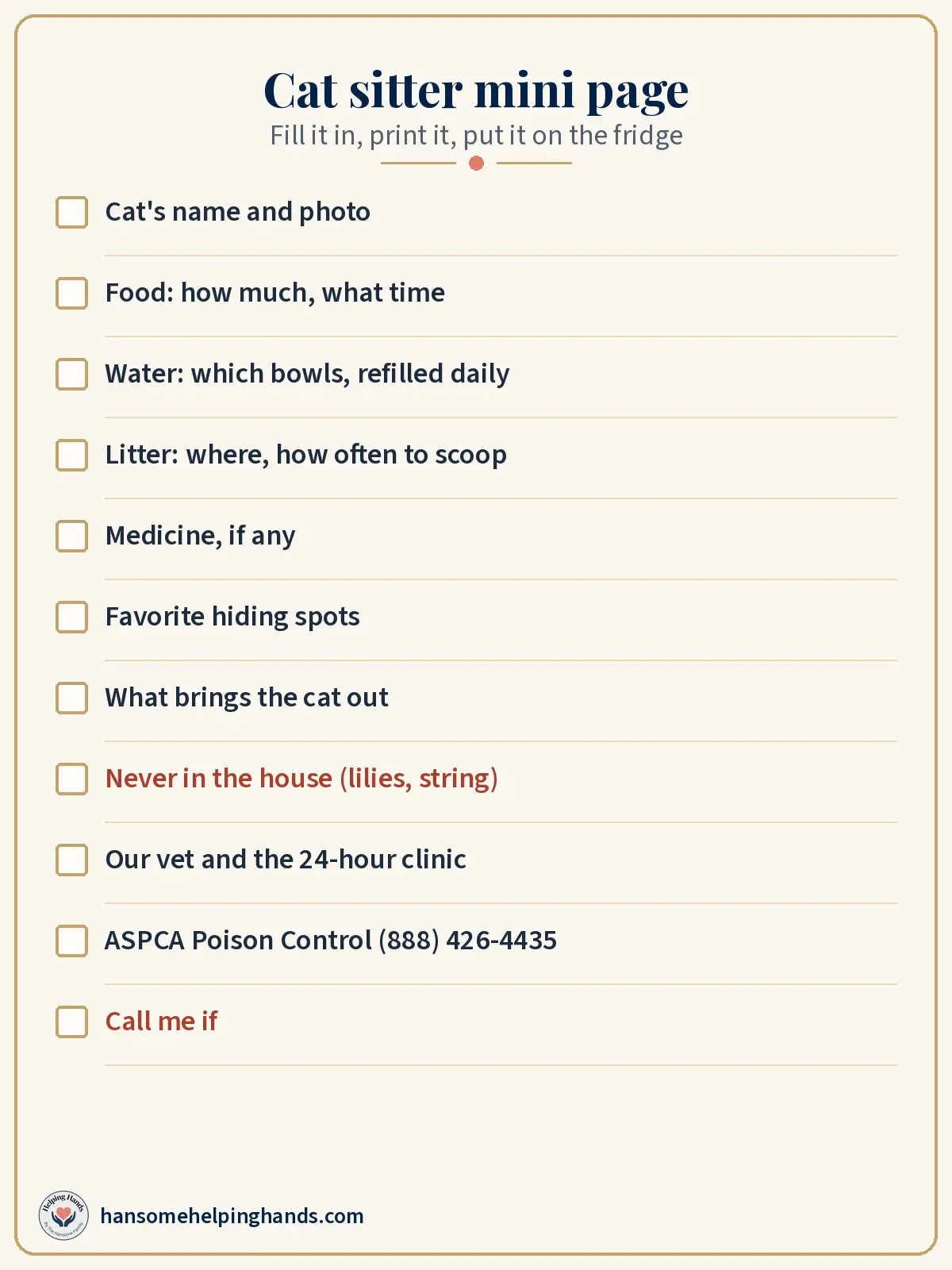
Cover the cat, not just the chores: how much food and when, which water bowls to refill, where the litter box is and how often to scoop it, any medicine, favorite hiding spots and what brings the cat out, things that must stay out of reach, your vet and the 24-hour clinic, a poison hotline, and your call-me list.
Cats are a little different from dogs here. A dog usually greets the sitter at the door. A cat may spend the first visit under a bed, so the sitter needs to know where to look and how to check in without a chase. AAHA suggests listing your pet's favorite hiding places and texting the sitter a current photo in case the pet gets lost.
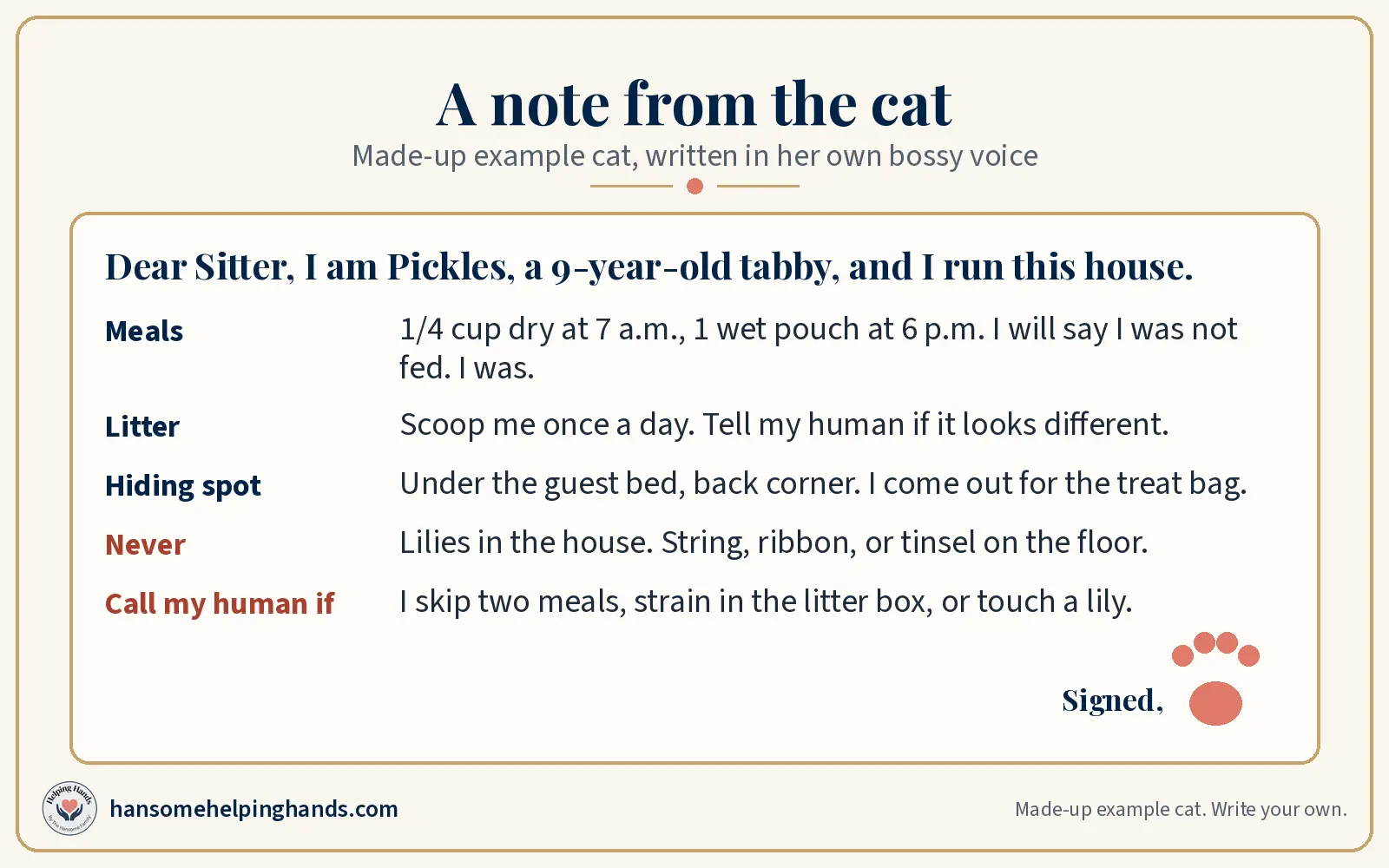
Picture this, as a made-up example: Pickles, a 9-year-old tabby, has opinions. Her note in our hero picture says she gets a quarter cup of dry food at 7 a.m. and a wet pouch at 6 p.m., and that she will claim she wasn't fed. She was. That one line saves the sitter from a second breakfast and saves Pickles from a stomachache.
| Topic | Typical dog note | Cat note |
|---|---|---|
| First hello | Greets the sitter at the door | May hide, so list the hiding spots (AAHA) |
| Bathroom | Walk times | Scoop the litter box at least once a day (ASPCA) |
| Lily bouquet | May cause minor stomach upset (FDA) | Can cause fatal kidney failure (FDA) |
| Daily health check | Energy on the walk | Eating, and what's in the litter box (Cornell) |
Why are lilies the big holiday warning for cats?
Because lilies are common in holiday bouquets and the whole plant is toxic to cats. The FDA says the stem, leaves, flowers, pollen, and vase water of true lilies and daylilies can all cause kidney failure. If a cat has touched or chewed a lily, the sitter should call the vet or a pet poison line right away.
The ASPCA's holiday safety tips note that many lilies typically found in holiday bouquets are highly toxic to cats. Timing matters too. The FDA says early treatment greatly improves the outlook, and that if treatment is delayed by 18 hours or more, the cat will generally have irreversible kidney failure. Early signs, starting 0 to 12 hours after eating it, include less activity, drooling, vomiting, and not eating.
So the easiest rule for the sitter page is: no lilies in the house while you're gone, and tell the sitter to leave any delivered flowers outside the cat's reach and text you a photo.

Not every plant called a lily is a true lily. The FDA says lily of the valley can make the heart beat abnormally, the gloriosa or flame lily is very dangerous to cats and dogs, and calla and peace lilies irritate the mouth. Different problems, same instruction for a sitter: call.

Which cat problems mean the sitter should call right away?
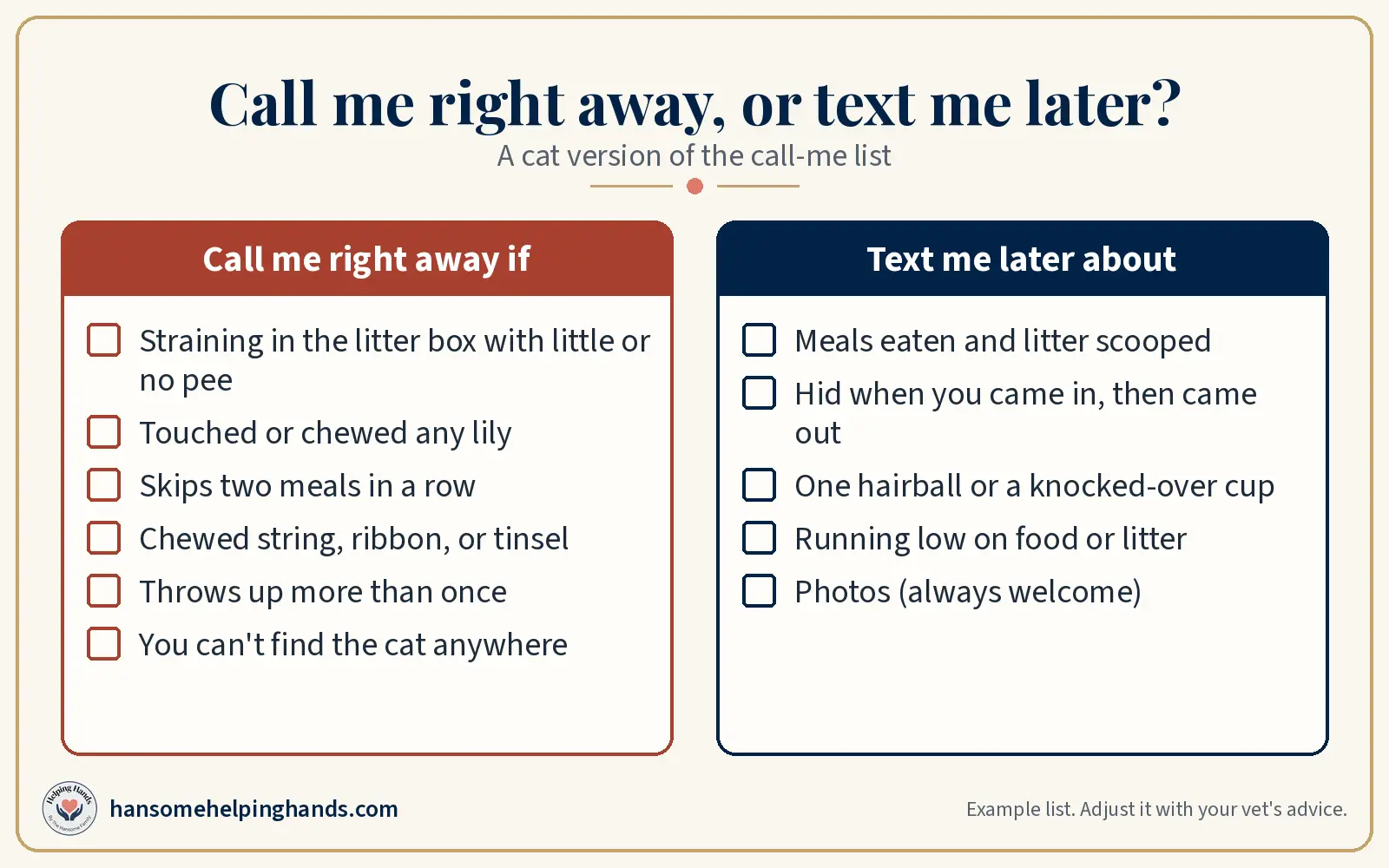
Anything that can get worse within hours. That includes straining in the litter box with little or no urine, touching or chewing a lily, chewing string, ribbon, or tinsel, refusing food, and a cat that can't be found. Write your own list with your vet's advice, and put it where the sitter will see it first.
Two of these are easy to miss because cats hide being sick:
- The litter box. Cornell's Feline Health Center says a cat with a urinary blockage strains and passes little or no urine, that a blockage is an absolute emergency, and that death can come in less than 24 to 48 hours. Your sitter is the only one looking at the litter box while you're away.
- The food bowl. Cornell says a serious liver condition in cats, hepatic lipidosis, is almost always preceded by the cat nearly refusing to eat, and can be fatal if not reversed promptly. A cat that stops eating is a call, not a wait and see.
The ASPCA adds that swallowed tinsel can block the digestive tract and could even require surgery, so ribbon and tinsel go on the "never on the floor" line too.
Emergency or not? A quick sitter quiz
Here are five things a cat sitter might see on a visit. Tap each one to see what the official sources say, or what our made-up example cat's note says to do. It takes about a minute, and it's a good one to run through with your sitter before you leave.
The cat keeps going to the litter box, but little or nothing comes out.
Emergency. Cornell's Feline Health Center calls a urinary blockage an absolute emergency that needs a vet right away. Call the vet or 24-hour clinic first, then the owner.
There's yellow pollen on the cat's fur next to a bouquet.
Emergency. The FDA says licking lily pollen off fur can cause fatal kidney failure. Call the vet or a pet poison line right away, and photograph the flowers.
The cat hid under the bed when the sitter came in.
Usually not an emergency, and it's why the hiding spot belongs on the page. Check the spot, use what brings the cat out, and make sure the cat is eating and using the litter box.
The cat chewed a piece of curling ribbon off a gift.
Call the vet. The ASPCA warns that swallowed tinsel can block the digestive tract, and confetti strings can lodge in a cat's intestines. Don't pull on anything you can see.
The cat ate dinner but skipped breakfast.
Text the owner and keep watching. Our example cat's note says to call if she skips two meals in a row. Cornell says a cat that stops eating can get seriously ill, so refusing food is never a wait and see.

How do I make a cat sitter mini page?
Tick through the list below as you fill in each line on paper or in your phone notes. Your ticks save on this device, and the list prints on one page. Then put the finished page on the fridge, and walk the sitter through it once before you leave, including where the cat hides.
Tap to tick, your progress saves on this device
Want this on paper with room to write? See what's inside the Pet Sitter Handoff Pack.
A friendly tip from building our own sitter pages: write the amounts the way you'd measure them in your kitchen ("a quarter cup," "one pouch"), not "a scoop." Every household's scoop is a different size, and the cat will not correct the sitter.
What if I have more than one cat, or a cat and a dog?
Give each pet its own section, with a photo, so look-alike cats don't get mixed up. Note who eats where, who steals food, and whose medicine is whose. If you have a dog too, the dog's routine goes on its own page, and the lily rule still applies to the whole house.
For the full list of what any sitter needs, from house access to a self-check you can run before you leave, see our guide on what to leave for a pet sitter. If you'd like a copyable sample with a filled-in example, our pet sitter instructions template has one. And if you'd rather not build the pages yourself, our Pet Sitter Handoff Pack has pet cards for up to three pets, a meds grid, an emergency page, and a daily log the sitter fills in for you to read when you get home.
Frequently asked questions
How often should a cat sitter scoop the litter box?
The ASPCA says cats won't use a messy, smelly litter box and recommends scooping solid waste out at least once a day. Write your own routine on the sitter page, including where the litter and bags are kept, and ask the sitter to tell you if anything in the box looks different from normal.
Which poison number should a cat sitter call?
Put two numbers on the page. ASPCA Animal Poison Control is (888) 426-4435, and the FDA also lists the Pet Poison Helpline at 855-764-7661. A consultation fee may apply to either. Your own vet and the nearest 24-hour emergency clinic belong right next to them, so the sitter never has to search.
Are peace lilies and calla lilies dangerous to cats too?
They are less harmful than true lilies, but not harmless. The FDA says calla and peace lilies contain crystals that irritate the mouth and throat, causing drooling, pawing at the face, or vomiting, and the signs usually go away on their own. They don't cause the kidney failure that true lilies and daylilies do.
What if my cat hides the whole time the sitter is there?
Tell the sitter where to look before you leave. AAHA suggests listing your pet's favorite hiding places in the sitter instructions and texting the sitter a current photo of your pet in case it gets lost. Add what usually brings your cat out, such as a treat bag, so the sitter can lay eyes on the cat each visit.
Please note: This guide is not veterinary advice. Call your veterinarian or an emergency clinic for any health concern.
Sources
- FDA: Lovely Lilies and Curious Cats: A Dangerous Combination. Checked 2026-10-07
- ASPCA: Holiday Safety Tips. Checked 2026-10-07 (lilies in holiday bouquets, tinsel)
- ASPCA: General Cat Care. Checked 2026-10-07 (litter box scooping)
- Cornell Feline Health Center: Feline Lower Urinary Tract Disease. Checked 2026-10-07
- Cornell Feline Health Center: Hepatic Lipidosis. Checked 2026-10-07
- AAHA: Preparing for the Unexpected: Essential Pet Sitter Instructions. Checked 2026-10-07
- ASPCA Animal Poison Control, (888) 426-4435. A consultation fee may apply
Save this guide for later
Keep reading
- What to Leave for a Pet Sitter: A Printable Checklist
- Pet Sitter Instructions Template, With a Filled-In Example
- Pet Sitter Instructions: start here
- Got a NOMNC? How a Medicare Fast Appeal Works
- The Medicare Prescription Payment Plan: Spreading Drug Costs Across the Year
- The Pharmacy Said No: How to Ask for a Part D Coverage Determination
- Who to Notify When Someone Dies: A Printable US Checklist
- All guides