Dementia Behavior Log: How to Spot the Patterns the Doctor Needs to See
Turn hard days into patterns with a before, during, and after dementia behavior log the doctor can use.
Start here

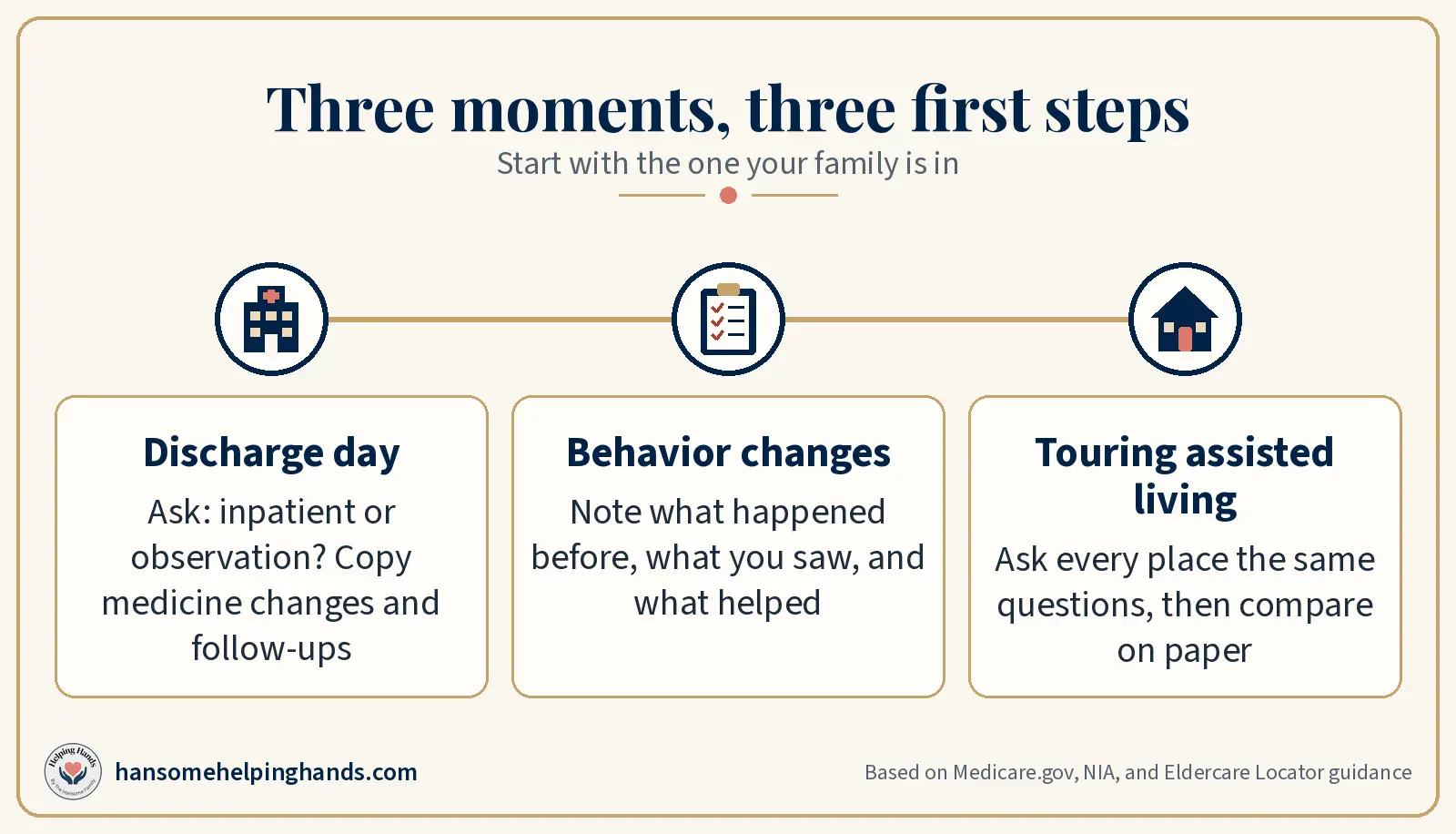
Caring for an aging parent usually arrives in moments: a hospital discharge, a new dementia diagnosis, a talk about assisted living. You do not need to know everything at once. Write down what the professionals tell you, ask the same questions every time, and use free official help like your local Area Agency on Aging.
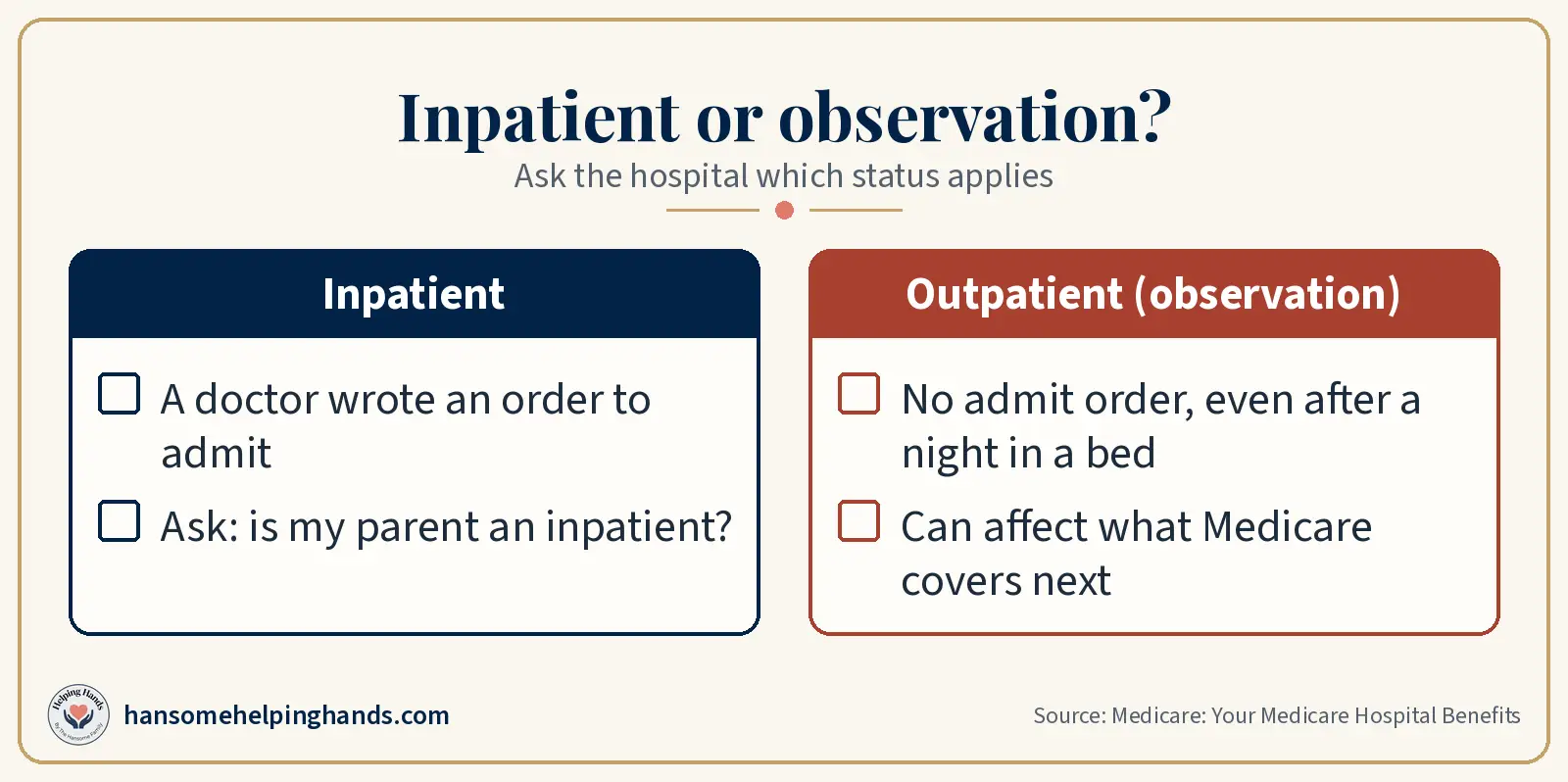
Did you know? A parent can spend the night in a hospital bed and still be an outpatient. Medicare says that if no doctor has written an order to admit them, they are outpatients even after an overnight stay under observation, and that status can affect what Medicare covers afterward. Medicare: Your Medicare Hospital Benefits
Tap the moment that fits your family today to see the first step.
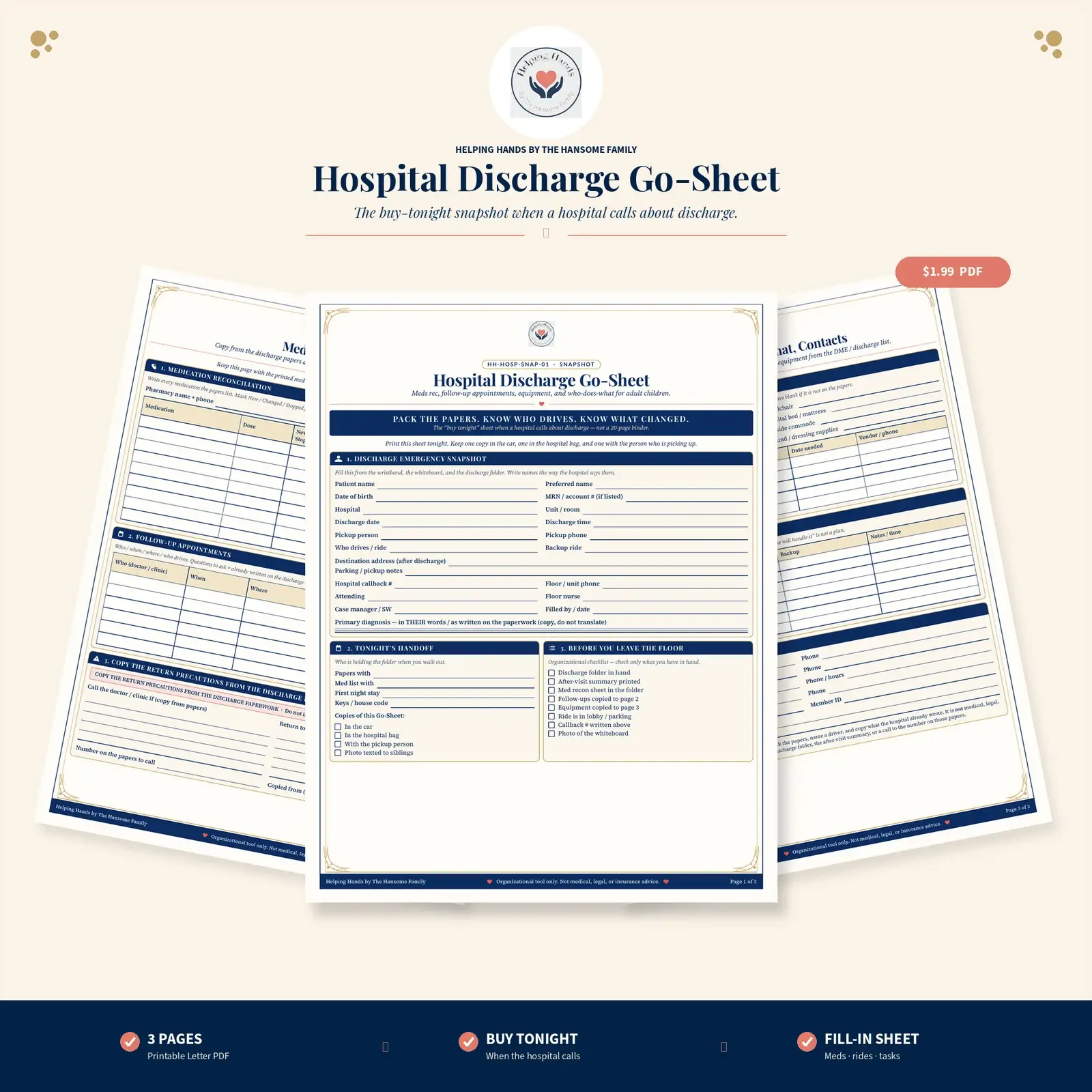
Ask whether your parent was an inpatient or under observation, then copy medicine changes, follow-up visits, and warning signs from the discharge papers in the hospital's own words. Our free hospital discharge checklist walks through what to ask, and the Hospital Discharge Go Sheet puts it on 3 pages.
The National Institute on Aging notes that pain, poor sleep, hunger, noise, and new medicines can all play a part. Jot down what happened before, what you saw, and what helped. Our free dementia behavior log shows how to spot weekly patterns, and the Dementia Behavior Tracker keeps those notes in one place.
Assisted living is licensed by each state, so rules vary. Ask every community the same questions about licensing, staffing, fees, and emergencies, then compare on paper that evening. Start with our free guide to questions to ask when touring assisted living, or use our Assisted Living and Memory Care Tour Pack for the full compare grid.
Each fall, Open Enrollment is another kitchen-table moment. Our Medicare Open Enrollment checklist walks through the Annual Notice of Change and the October 15 to December 7 window.
When tours start, bring the same list every time. Our questions to ask when touring assisted living guide includes a printable scorecard for three communities in one day.
When hard moments blur together, our dementia behavior log walks through a before, during, and after note system with a printable mini page for doctor visits.

A parent is an inpatient only when a doctor writes an order to admit them. Without that order, they are an outpatient under observation, even after a night in a hospital bed, and that can affect what Medicare covers next. Ask the hospital which status applies. Our hospital discharge checklist lists the other questions to ask before your parent leaves.
If rehab, home health, or hospice says Medicare coverage is ending, the paper is called a NOMNC, and the deadline to appeal is noon the day before the end date. Our guide to how a Medicare fast appeal works has a call script and a free call sheet.
Turn hard days into patterns with a before, during, and after dementia behavior log the doctor can use.
What to ask before a parent leaves the hospital, from inpatient or observation status to medicines, follow-ups, and who to call.
A printable assisted living tour scorecard: questions they hope you skip, what to watch for, and how to compare three communities.
Caregiving
The short sheet to fill in when the hospital calls to say your parent is going home today.
$1.99 on Gumroad · 3 pages
Caregiving
Turn a blur of hard days into clear notes the doctor can actually use.
$7.99 on Gumroad · 13 pages
Caregiving
Same questions at every tour, so you can compare communities side by side instead of by gut feeling.
$9.99 on Gumroad · 12 pages
Ask whether your parent was admitted as an inpatient or kept under observation, which medicines are new, changed, or stopped, when the follow-up visits are, what equipment or home help was ordered, which warning signs mean you should call, and which phone number to use with questions once you are home.
Each state licenses and regulates assisted living. The Congressional Research Service notes that, unlike nursing homes, assisted living has no federal minimum quality or staffing standards, so rules and even the names used vary by state. Your local Area Agency on Aging can point you to your state's licensing office and inspection reports.
Generally no. Medicare.gov says Medicare does not pay for long-term care, also called custodial care, such as help with bathing, dressing, and eating when that is the only care needed. Families usually pay privately, use long-term care insurance, or look at Medicaid programs, which vary by state. Confirm your options locally.
Start with the Eldercare Locator, a free public service that connects you to your local Area Agency on Aging for caregiver support, respite, meals, and other services. For dementia questions, the Alzheimer's Association runs a free helpline at 1-800-272-3900. Your parent's doctor can also refer you to local programs.
Please note: This printable is an organizational and educational tool for family caregivers only. It is not medical, legal, insurance, financial, or placement advice, and it does not replace your loved one's doctors, the hospital's discharge papers, or professional care. Rules and coverage vary by state and plan, so confirm them on the official sites linked here. In an emergency, call 911.