Who Will Take Care of My Pet If I Die? Myths, Facts, and a Simple Plan
Myths vs facts about pet care after you die, plus a free caregiver plan card for the first 48 hours.
Start here

A pet emergency plan has three parts, following Ready.gov: a plan for where your pets will go and who will help, a kit with food, water, medicine, and supplies, and a way to stay informed. The step most families skip is the paperwork: records, photos, and microchip details kept together and ready to grab.
Did you know? Ready.gov suggests packing a picture of you and your pet together. If you are separated in an emergency, the photo helps you prove the pet is yours and helps others identify your pet. Ready.gov: Prepare Your Pets for Disasters
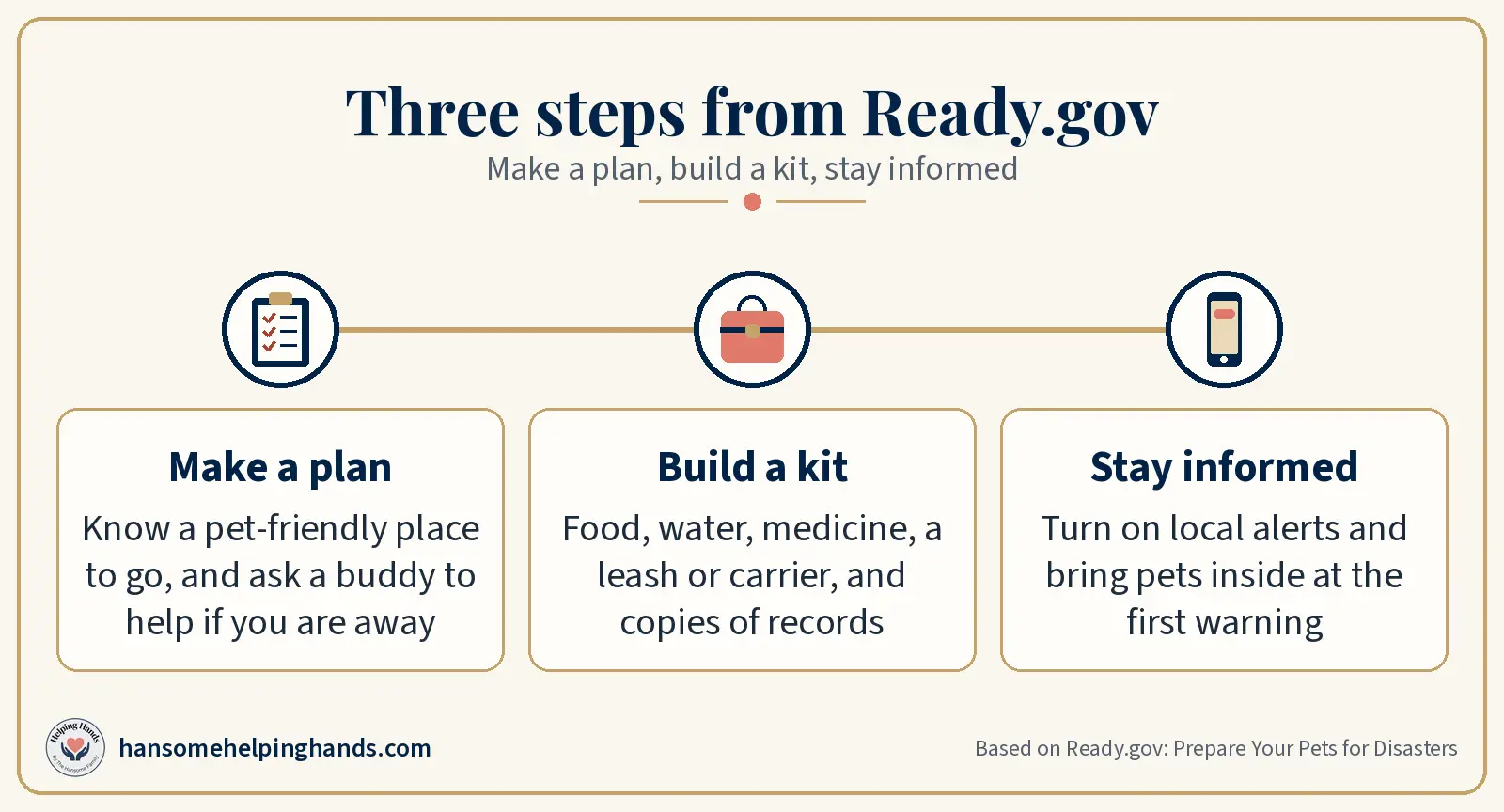
Ready.gov also suggests a buddy system: a neighbor, friend, or relative who can care for or evacuate your pets if you cannot. It notes that many public shelters and hotels do not allow pets inside, so find a pet-friendly place ahead of time, and bring pets indoors at the first warning of a storm.

Our guides compare what official sources like the CDC, ASPCA, AVMA, and Ready.gov recommend, so you can see where they agree and make a plan that fits your home.
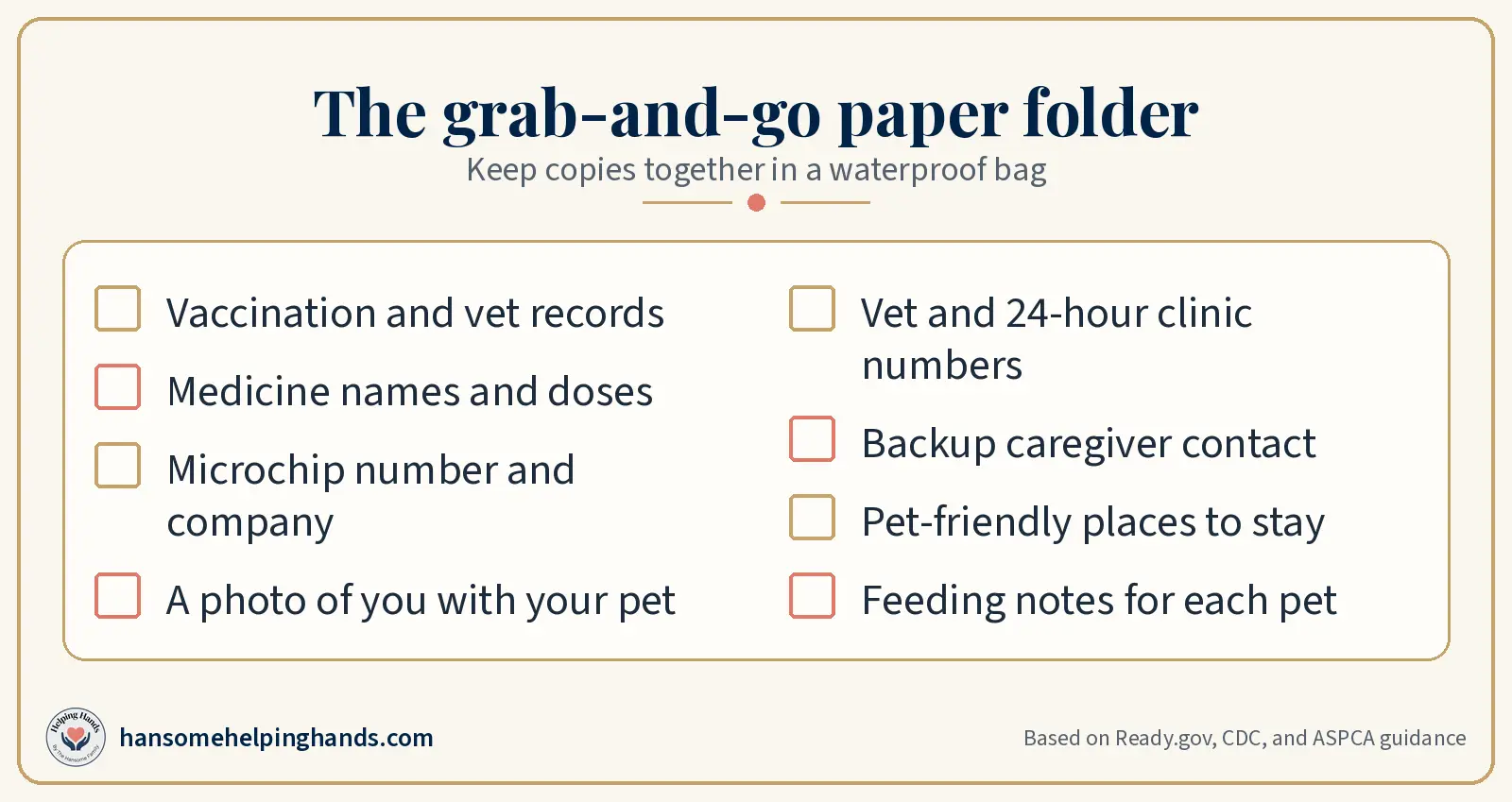
Keep copies of these together in a waterproof bag, and save photos of them on your phone too.

Tap to tick, your progress saves on this device
Want this on paper with room to write? See what's inside the Pet Emergency Binder.
Myths vs facts about pet care after you die, plus a free caregiver plan card for the first 48 hours.
Myths vs facts about pet records, plus a free one-page pet medical summary to print.
CDC, ASPCA, Ready.gov, and AVMA compared, plus the paperwork most kits forget.
Pets
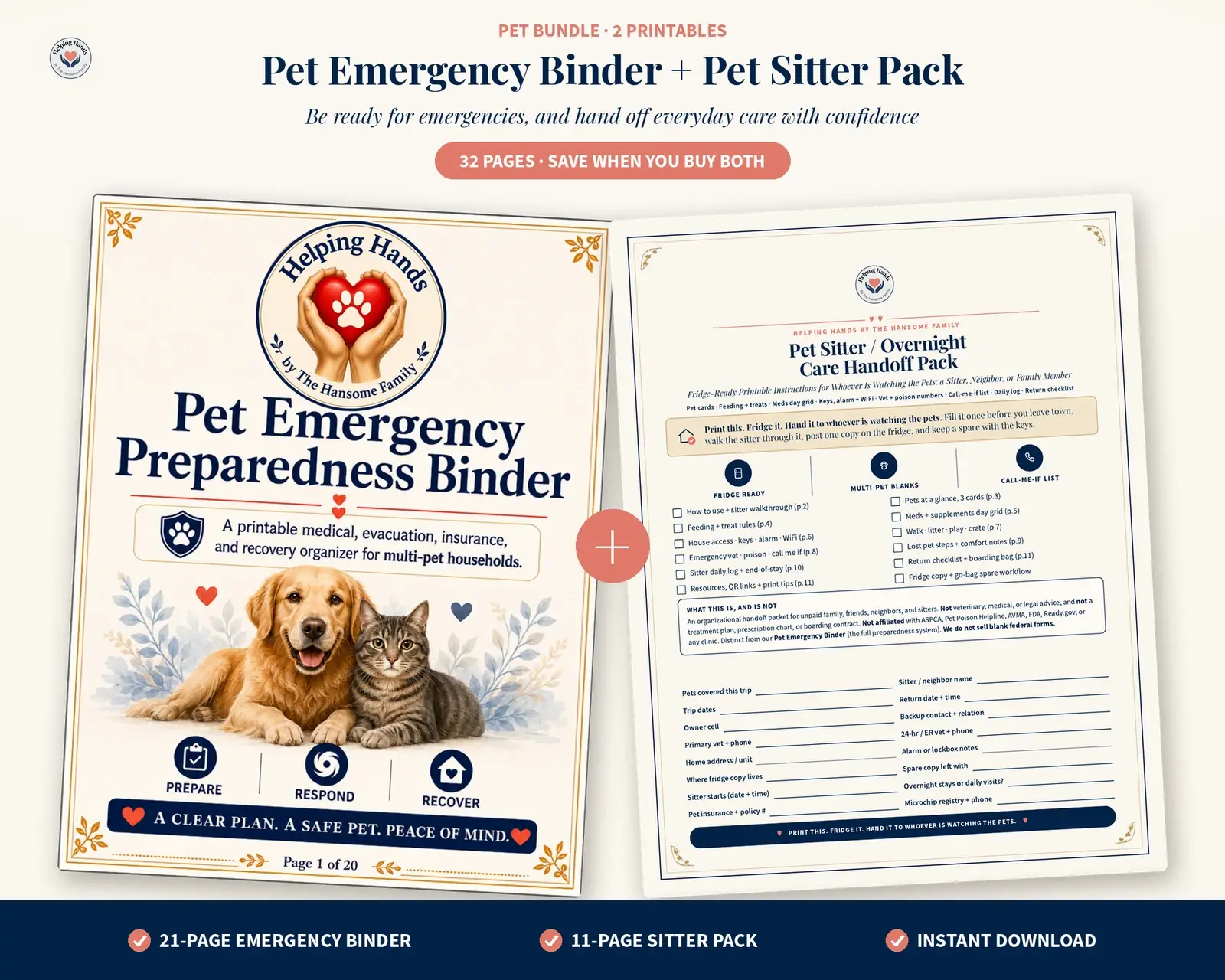
Every record, contact, and plan for your pets, in one binder you can grab and go.
$6.99 · 21 pages
Pets
The long-term pet plan and the everyday sitter handoff, together.
$9.99 · 2 PDFs, 32 pages
A pet emergency plan is a written plan for keeping your pets safe in a disaster or crisis. Ready.gov breaks it into three steps: make a plan, build a kit, and stay informed. It covers where your pets will go if you evacuate, who can help if you are away, and what supplies and records to bring.
Yes. Ready.gov says that if local officials ask you to evacuate, your pet should evacuate too, because pets left behind may end up lost, injured, or worse. The ASPCA says the same: if it is not safe for you, it is not safe for your pets. Plan pet-friendly places to stay ahead of time.
Ready.gov and the ASPCA both recommend microchipping as a lasting form of ID, along with a collar and current ID tags. A microchip only helps if the registration is current, so keep your address and phone number up to date with the microchip company and add an emergency contact who lives outside your area.
Please note: This page is for general education only. It is not veterinary, medical, legal, or financial advice. Official guidance and phone numbers can change, so confirm them on the official sites linked here. We are not affiliated with any agency or organization we cite.