Your New Puppy's First Week, Day by Day (Printable Schedule)
A day by day first week plan with a potty break chart by age and a free checklist to print.
Start here

Bringing home a puppy goes best with three things ready: basic supplies from a checklist, a safe space with boundaries, and a simple daily routine for meals, sleep, and potty breaks. AAHA says supervision is the single most important factor in house training, so plan who watches the puppy at each part of the day.
Did you know? The FDA warns that xylitol, a sweetener in some sugar-free gum, candy, toothpaste, and even some peanut butters, can be poisonous to dogs. Keep bags and counters clear, and check labels before sharing nut butter. FDA: Paws Off Xylitol
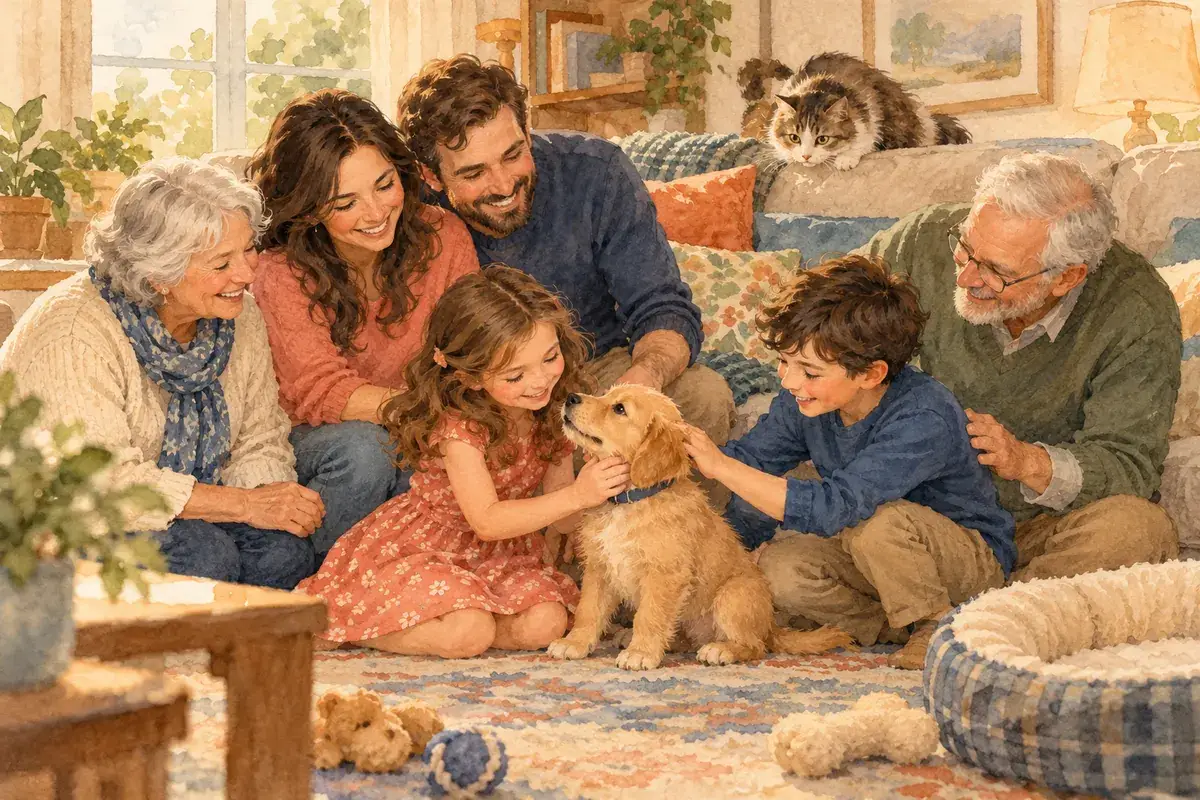
The first weeks are a mix of joy and lost sleep. AAHA's advice is to lead with patience and trust: build a positive crate habit without forcing it, introduce new sights and sounds gently, and ask your veterinarian when it is safe to meet other dogs.
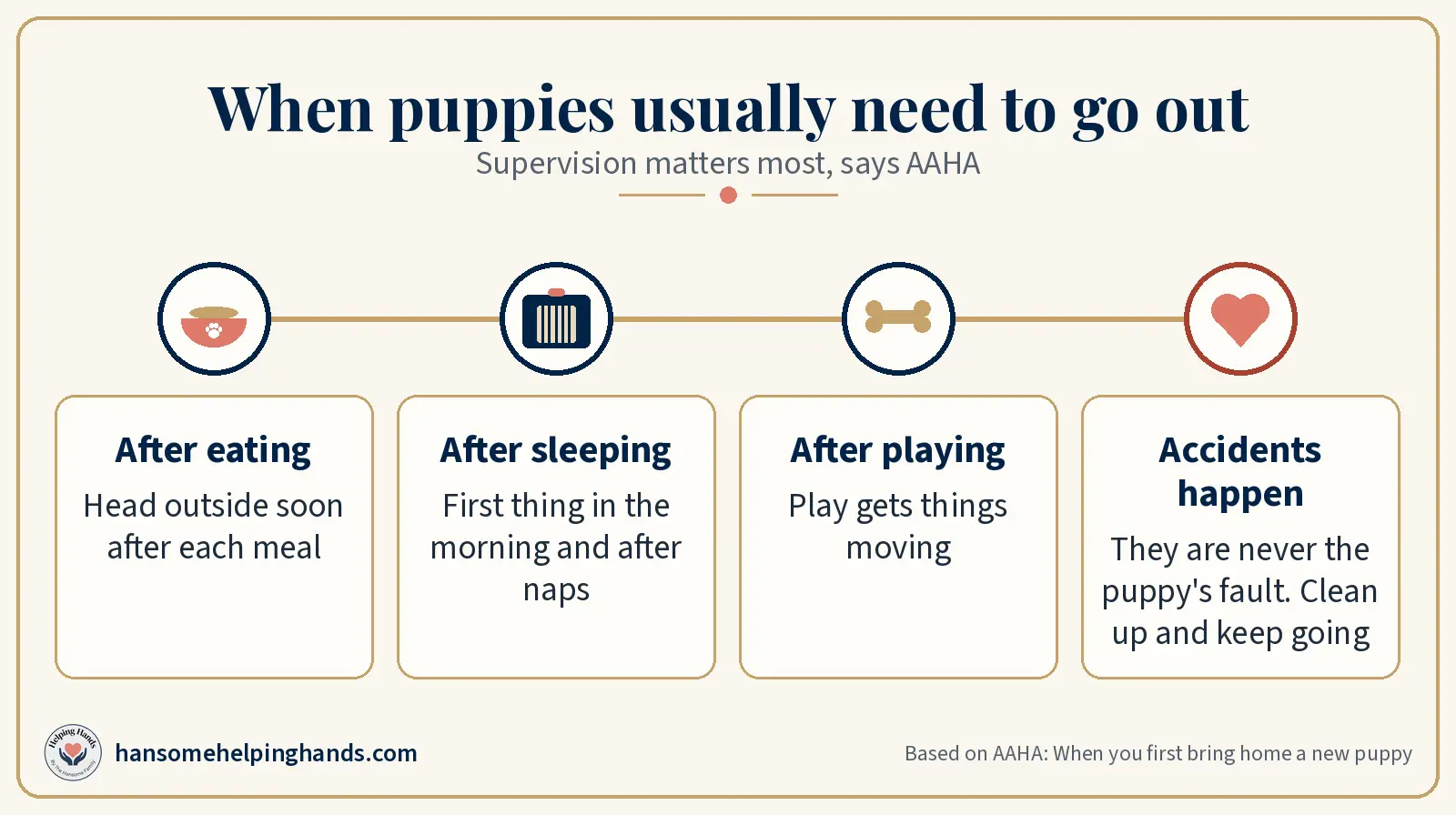

Tick these off before you bring your puppy home. The list follows the AKC new puppy checklist.
Tap to tick, your progress saves on this device
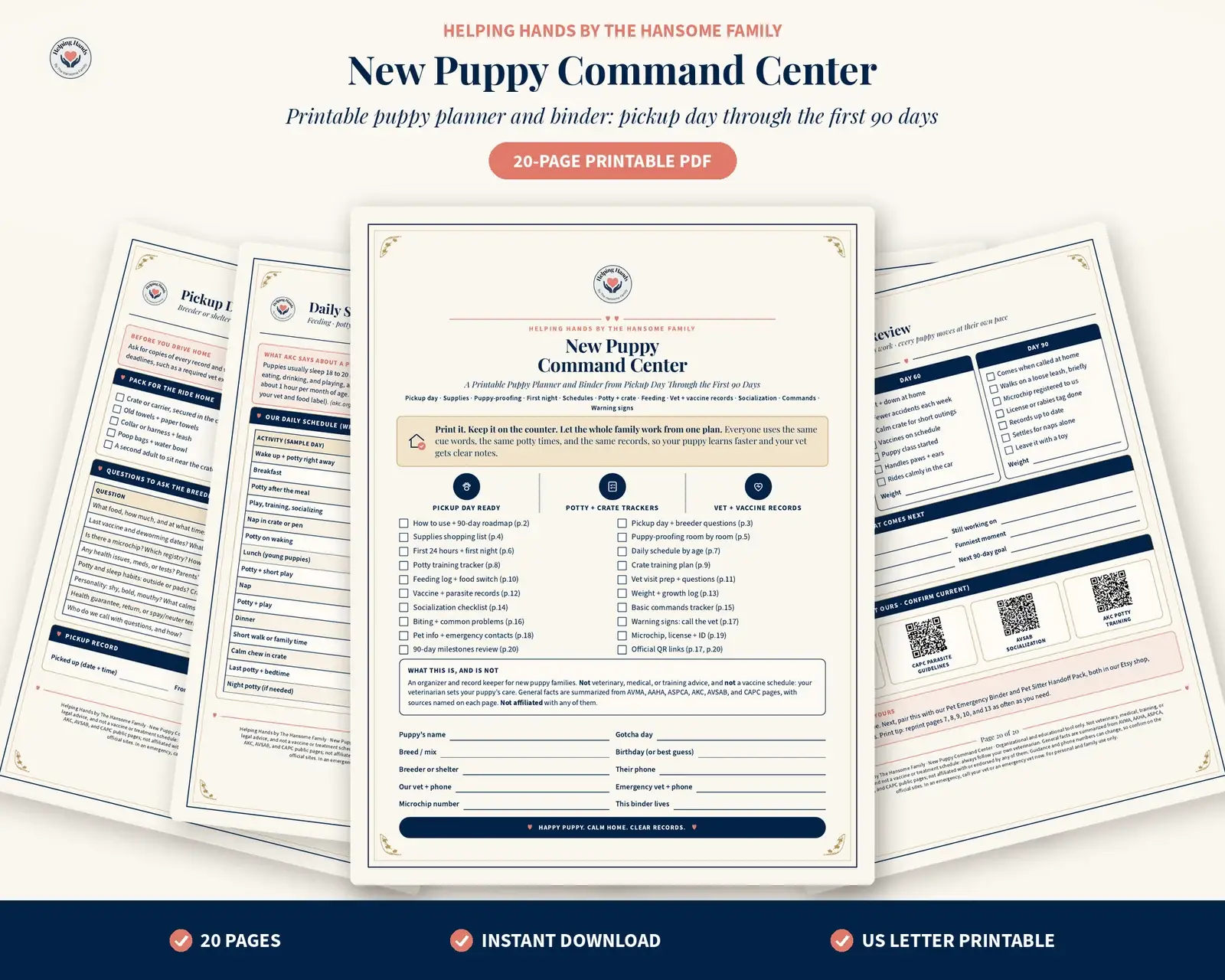
Want this on paper with room to write? See what's inside the New Puppy Command Center.
A day by day first week plan with a potty break chart by age and a free checklist to print.
Pets
One calm plan for the whole family, from pickup day to day 90.
$6.99 · 20 pages
The American Kennel Club's checklist covers a harness and training leash, a bed, puppy teething toys, training treats, dental care supplies, a crate, puppy pads, poop bags, food bowls, and gates to limit which rooms the puppy can use at first. Buy the basics before pickup day so the first night is calm.
It is your choice. AAHA says a crate is useful for safety, but notes it is not absolutely necessary at night. If you use one, AAHA suggests placing it close to your bed so your puppy feels your presence and you can hear when a potty break is needed. Never force a puppy into a crate.
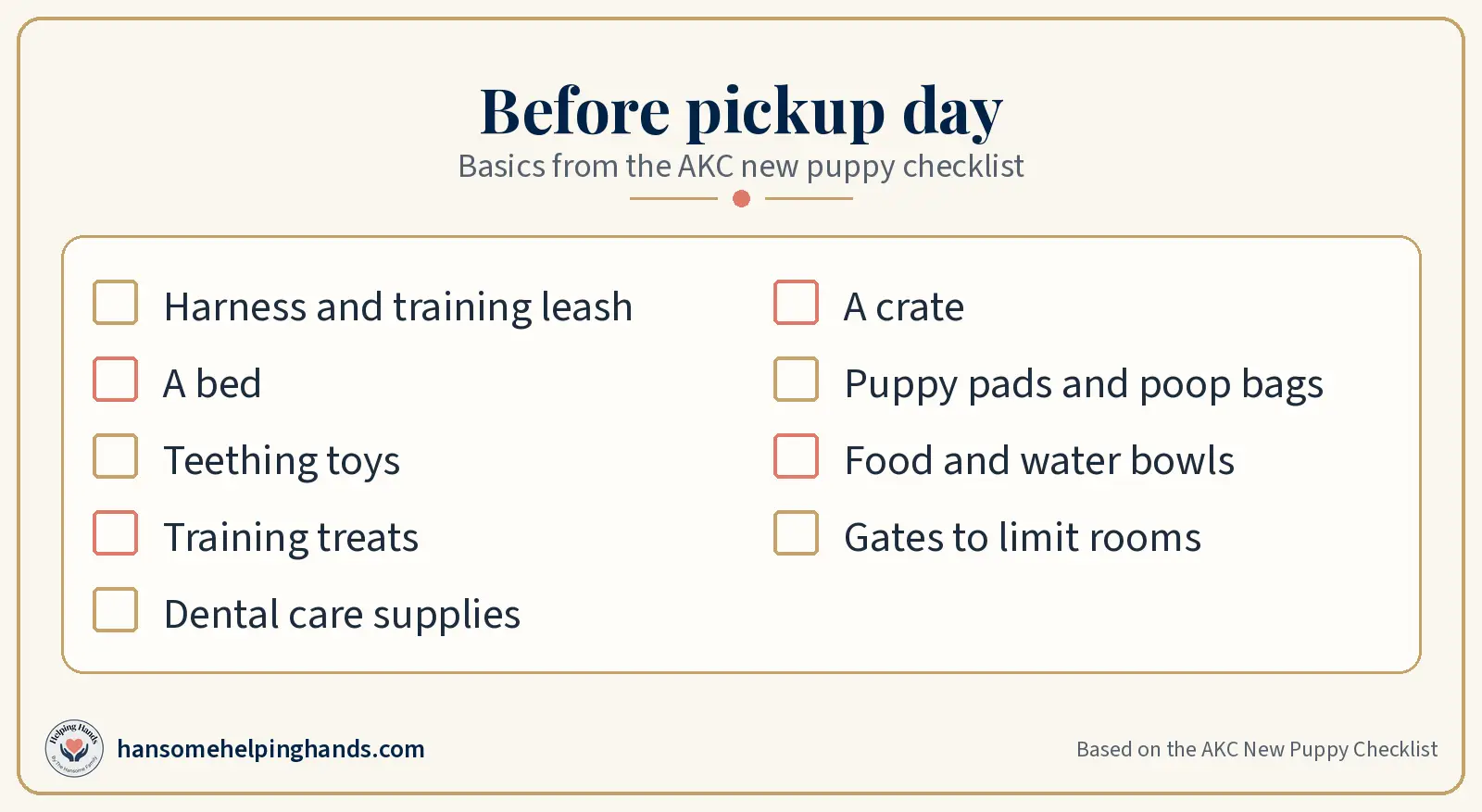
It varies. AAHA says house training can happen quickly with consistency, but it may take several months before a puppy can reliably hold it through the night. Supervision is the most important factor, along with a regular schedule. Puppies usually need to go out after eating, sleeping, and playing, and accidents are never their fault.
Please note: This page is for general education only. It is not veterinary, medical, legal, or financial advice. Official guidance and phone numbers can change, so confirm them on the official sites linked here. We are not affiliated with any agency or organization we cite.